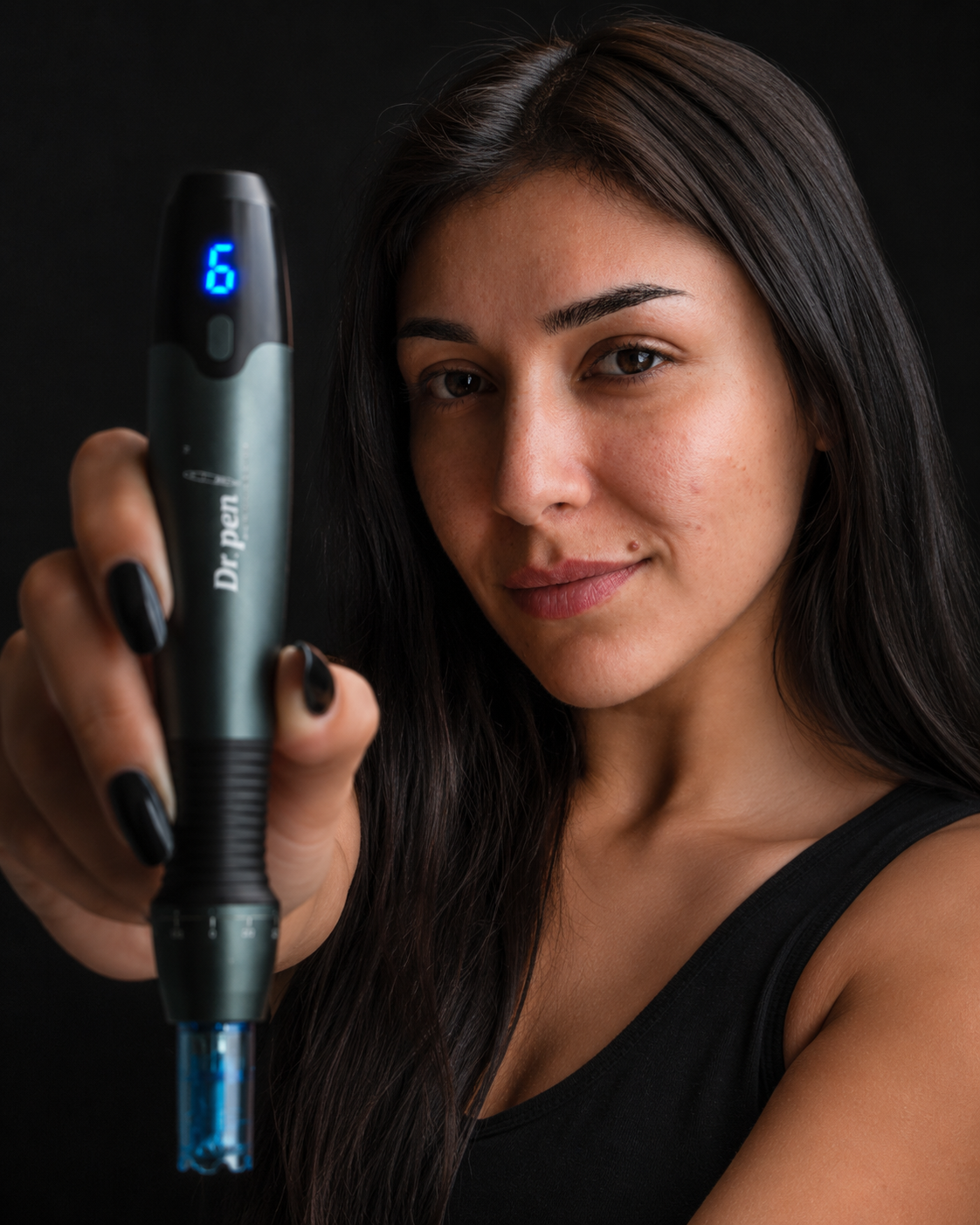
Understanding the different types of microneedling helps you choose a treatment that fits your skin goals, comfort level and experience. A shallow nano treatment for glow is not the same as a professional radio frequency session for firming, and a microneedling pen is not used the same way as a roller. The right choice depends on what you want to improve, where you plan to treat and whether you are working at home or with a licensed professional.
Microneedling is often described as collagen induction therapy because it creates controlled micro-channels in the skin. The skin responds by repairing itself, which can support smoother texture, a more even-looking tone and firmer-looking skin over time. If you want a refresher on the basics before comparing devices, Dr. Pen Store has a helpful guide on what microneedling is and how it works.
The Different Types of Microneedling at a Glance
The different types of microneedling vary mainly by needle depth, delivery method and whether they add another technology such as serum infusion, radio frequency or LED light. Some options are designed for cosmetic exfoliation and product absorption, while others are clinical treatments that require professional training.
| Type | How it works | Common uses | Typical setting |
|---|---|---|---|
| Microneedling pen | Motorized cartridge moves needles vertically | Texture, pores, fine lines, acne scars, scalp care | At home or professional use, depending on depth and protocol |
| Dermaroller | Roller with fixed needles moves across skin | Broad cosmetic skin refresh, beginner routines | Mostly at home, with conservative use |
| Dermastamp | Flat stamp presses needles into targeted areas | Small scars, edges, precise spots | At home or professional use |
| RF microneedling | Needles deliver radio frequency energy into skin | Firmness, laxity, acne scars, deeper remodeling | Professional clinics |
| Nano needling | Very shallow nano tips work on the outer surface | Glow, texture, serum absorption, minimal downtime | At home or professional facial routines |
| Serum-infusion microneedling | Microneedling paired with controlled serum delivery | Hydration, radiance, cosmetic rejuvenation | Professional or advanced users, depending on device |
| Scalp microneedling | Microneedling applied to the scalp | Hair and scalp care routines | At home or professional use |
The different types of microneedling are not interchangeable. A person targeting post-acne texture may need a different approach than someone focused on dullness, thinning-looking hair or early laxity around the jawline.
Microneedling Pens
Microneedling pens use a motorized handpiece and a sterile cartridge with tiny needles that move up and down in a controlled vertical motion. Compared with rolling devices, pens are often preferred for precision because the cartridge can be moved across curved areas of the face and used with different needle depths when appropriate.
Among the different types of microneedling, pens are one of the most versatile options because they can be adapted to many concerns. Shorter cosmetic depths are commonly used for a refreshed-looking complexion and product absorption, while deeper professional treatments may be used for acne scars, texture and stretch marks.
The cartridge matters as much as the pen. Different needle counts and tip styles can change how the treatment feels and how targeted the pass is. For safety, cartridges should be sterile, compatible with the device and used according to the manufacturer’s instructions.
Dermarolling
A dermaroller has a handle and a rolling head covered with tiny needles. As it moves across the skin, the needles enter at a slight angle because the head rolls rather than moves straight up and down.
Dermarollers are simple and affordable, but they are less precise than motorized pens. They may be suitable for broad, conservative cosmetic use, yet they are not ideal for every concern or every area of the face. Uneven pressure, excessive passes or poor sanitation can increase irritation.
For beginners, the main appeal is simplicity. The main limitation is control. A pen-style device generally gives more consistent vertical stamping, especially around the nose, chin, hairline and other areas where a roller can be awkward.
Dermastamping
Dermastamping uses a small flat head with needles that press directly into the skin. Instead of rolling across the face, the device is lifted and stamped in a controlled pattern.
This method can be useful for small, targeted areas such as isolated textural marks or hard-to-reach spots. It is less efficient for treating larger zones, but the straight in-and-out movement can make it more controlled than rolling.
Dermastamping is also common in scalp routines because it allows targeted application along areas of concern. As with every microneedling method, the goal is controlled stimulation, not aggressive pressure.
RF Microneedling
RF microneedling combines needles with radio frequency energy. The needles enter the skin and deliver heat below the surface, which can support deeper remodeling than standard cosmetic microneedling. This is why RF microneedling is usually performed in professional settings.
Of the different types of microneedling, RF microneedling is the most technology-intensive and is often considered for acne scarring, firmness and skin laxity. It may involve more downtime, higher cost and stricter aftercare than basic microneedling.
It is also worth separating RF microneedling from needle-free radio frequency devices. If your main goal is facial or body firming without needles, the Bio Pen T6 Professional RF & EMS Skin Tightening Device is a related option to know about, but it is not the same category as RF microneedling because it takes a needle-free approach.
Nano Needling
Nano needling uses very shallow nano tips that work on the skin’s surface rather than creating the same kind of controlled punctures as microneedling needles. It is often chosen for glow, smoothness and serum absorption with little to no visible downtime.
This is a good option for people who want a cosmetic refresh but do not need deeper collagen induction. It can be especially useful between microneedling sessions, as long as the skin has fully recovered and the routine is appropriate for your skin type.
The distinction between nano tips and micro-needles is important. For a deeper comparison, Dr. Pen Store explains when each option makes sense in its guide to micro-needles vs nano-needles.

Serum-Infusion Microneedling
Serum-infusion microneedling is designed to pair micro-channeling with controlled delivery of compatible topical formulas. The aim is not simply to puncture the skin, but to support a more complete cosmetic treatment experience with hydration-focused or rejuvenating serums.
Within the different types of microneedling, serum-infusion devices can appeal to professionals and experienced users who want more than a basic pen treatment. The Hydra Pen H6 Advanced Serum Infusion Microneedling Pen with Light Therapy, for example, is positioned as an advanced serum-infusion microneedling pen with red and blue LED light therapy.
The serum choice matters. Avoid harsh actives immediately after microneedling unless they are specifically intended for that use. Fragrance, exfoliating acids and strong retinoids can be too irritating for freshly treated skin.
Scalp Microneedling
Scalp microneedling applies the same controlled-stimulation concept to the scalp. It is often used as part of a broader hair and scalp care routine, especially in areas where people want to support the appearance of thicker, healthier-looking hair.
Technique differs from facial microneedling. The scalp has hair, natural oils and different contours, so sectioning and sanitation are especially important. Many people prefer a pen or stamp-style method because it can be easier to target specific areas than a roller.
Scalp microneedling is not a stand-alone medical treatment for hair loss. If shedding is sudden, patchy or severe, consult a healthcare professional to rule out underlying causes before starting any device-based routine.
Body Microneedling for Stretch Marks and Texture
Body microneedling is commonly discussed for stretch marks, crepey-looking texture and uneven tone on areas such as the abdomen, thighs, hips and upper arms. Body skin can be thicker than facial skin, but that does not mean more pressure is better.
When comparing the different types of microneedling for body use, the best option often depends on the size of the area. Pens offer precision, rollers can cover larger zones and professional treatments may be more appropriate for deeper or older stretch marks.
Body treatments also require realistic expectations. Stretch marks and scars may soften in appearance over a series of sessions, but they usually do not disappear completely. Consistency, aftercare and sun protection matter as much as the device.
How to Choose the Right Microneedling Type by Goal
Your ideal method depends on your concern, sensitivity, budget and access to professional care. If you are unsure, start conservatively and prioritize safety over intensity.
| Goal | Often considered | Why it may fit |
|---|---|---|
| Dullness or rough texture | Nano needling or shallow pen treatment | Supports glow and smoother-looking skin with lower intensity |
| Fine lines | Microneedling pen or professional treatment | Helps support collagen-focused routines |
| Acne scars | Professional microneedling, pen treatments or RF microneedling | More targeted remodeling may be needed |
| Enlarged-looking pores | Microneedling pen or nano needling | Can support smoother-looking texture over time |
| Stretch marks | Pen, roller or professional body treatment | Larger areas and deeper texture may need a structured plan |
| Scalp care | Pen or stamp method | Allows more controlled placement through hair |
| Firmness without needles | Needle-free RF and EMS device | Better fit for users who want a non-needling tightening approach |
The different types of microneedling also require different aftercare. A low-intensity nano session may call for gentle hydration and sunscreen, while deeper treatments may need several days of avoiding makeup, sweat, exfoliants and direct sun exposure.
Professional vs At-Home Microneedling
Professional microneedling is best for deeper concerns, advanced acne scarring, significant texture changes and treatments that combine energy-based technology. Licensed providers can assess contraindications, control treatment depth and manage complications if they occur.
At-home microneedling is better suited to conservative cosmetic routines and maintenance. It can be useful for people who want gradual improvements in texture and glow, provided they follow instructions carefully and use sterile, compatible cartridges.
The U.S. Food and Drug Administration warns that microneedling devices create punctures in the skin and can carry risks such as infection, irritation, pigment changes and injury when misused. The FDA’s consumer guidance on microneedling device benefits, risks and safety is a good resource before starting.
Cartridge Compatibility and Needle Selection
Cartridge choice is one of the most practical differences between microneedling devices. A higher needle count is not automatically better, and a cartridge meant for one pen should not be forced onto another device.
When evaluating the different types of microneedling, look at the full system, not only the handpiece. Check that replacement cartridges are available, genuine and designed for your model. This helps maintain fit, performance and hygiene.
Needle length should be chosen based on the treatment area, concern and user experience. For at-home use, conservative settings are generally safer. Deeper treatment plans should be guided by a qualified professional, especially on darker skin tones, scar-prone skin or sensitive areas.
Safety Considerations Before You Start
Microneedling should not be performed on active acne, open wounds, skin infections, cold sores, inflamed eczema or irritated skin. People who are pregnant, immunocompromised, prone to keloids or using certain medications should speak with a qualified professional before treatment.
Skin type also matters. Microneedling can be suitable for many skin tones, but irritation and post-inflammatory hyperpigmentation are possible if the treatment is too aggressive or aftercare is poor. Dr. Pen Store covers this topic in more detail in its guide on whether microneedling is safe for your skin type.
Good aftercare is simple: keep the skin clean, avoid harsh actives, protect from sun exposure and do not pick at flaking skin. The safest results usually come from patience, not from doing more passes or treating too often.
Frequently Asked Questions
What are the main different types of microneedling? The main categories include microneedling pens, dermarollers, dermastamps, RF microneedling, nano needling, serum-infusion microneedling, scalp microneedling and body microneedling.
Is nano needling the same as microneedling? No. Nano needling is more superficial and is typically used for glow, texture and serum absorption, while microneedling uses actual needles to create controlled micro-channels in the skin.
Which type of microneedling is best for acne scars? Acne scars often need a more structured approach, such as professional microneedling, pen-based treatments or RF microneedling. The best choice depends on scar type, skin tone, sensitivity and treatment history.
Can I do microneedling at home? Many people use at-home microneedling devices for conservative cosmetic routines, but safety depends on proper sanitation, compatible sterile cartridges, correct technique and following the device instructions.
How do I know which Dr. Pen cartridges to buy? Match cartridges to your exact device model and treatment goal. Do not assume all cartridges fit all pens, and avoid unverified products because poor fit or questionable sterility can increase risk.
Find the Right Dr. Pen Device for Your Routine
The best microneedling choice is the one that matches your goal, comfort level and safety needs. If you are comparing pens, serum-infusion options, nano tips or compatible replacement cartridges, Dr. Pen Store focuses on genuine devices and accessories so you can build your routine around the correct tools rather than guesswork.
Use the guide above as a starting point, then compare device pages, cartridge compatibility and aftercare needs before you buy. A thoughtful setup is usually more effective than choosing the most intensive option first.